
Water Damage Restoration in Virginia Beach & Hampton Roads
Mastertech Environmental Tidewater provides water damage restoration throughout Hampton Roads and Coastal Virginia. Water extraction, structural drying, moisture monitoring, and mold prevention for homes and properties.
Water damage is not always obvious. It hides under flooring, inside walls, behind cabinets, and in ceilings. If you had a water event, call us and describe what happened - we'll help you figure out what needs to happen next.
Tell Us What's Going On
Describe what happened and we'll get back to you quickly. Water damage, pipe burst, flooding, appliance leak - tell us what you're dealing with.
Water Damage in Hampton Roads
Why Water Damage Restoration in Coastal Virginia Requires Thorough Drying
Hampton Roads is a coastal region with high ambient humidity, significant storm activity, and a mix of older and newer housing stock. Water damage here is not just about the event itself - it's about what happens to building materials in the days and weeks after. In a humid coastal environment, materials that do not dry completely will hold moisture and mold will follow.
Storm water intrusion is common during nor'easters and tropical systems. Pipe bursts, washing machine hose failures, water heater leaks, and roof leaks are year-round issues. Crawl space water from ground moisture and poor drainage is another frequent problem in neighborhoods throughout Virginia Beach, Chesapeake, Norfolk, and the surrounding communities.
The biggest mistake homeowners make after a water event is assuming the problem is resolved once the visible water is gone. Water migrates into wall cavities, under flooring, behind cabinets, and into ceiling assemblies. Without proper moisture mapping and structural drying, those areas stay wet and mold begins within 24 to 48 hours.
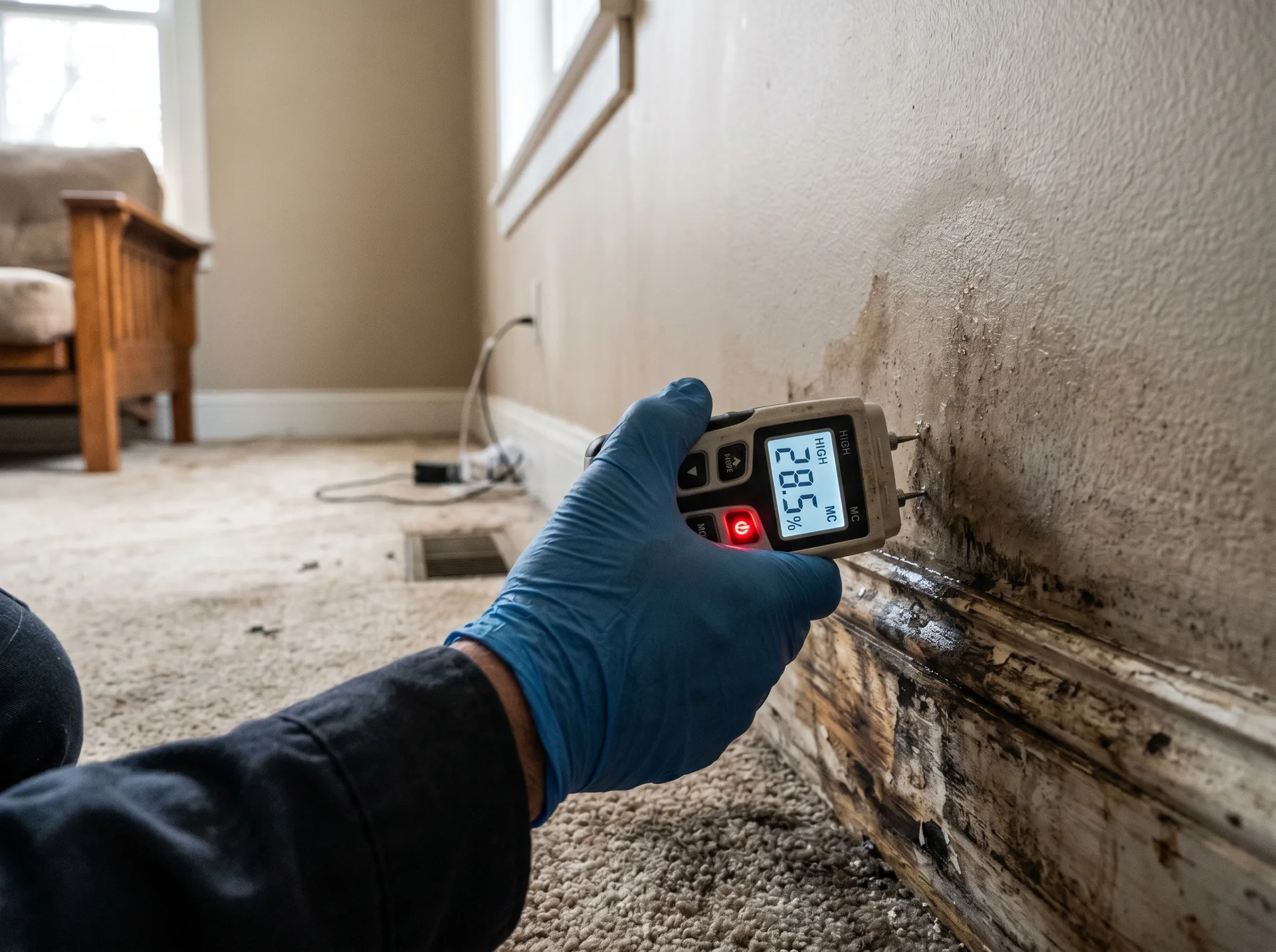
Mastertech Tidewater handles water damage restoration using calibrated moisture meters, thermal imaging, commercial drying equipment, and daily monitoring to confirm materials are actually drying - not just surface-dry.
Storm Water Intrusion
Coastal storms push water through roofs, windows, foundations, and doors in ways that are not always immediately visible.
Plumbing and Appliance Failures
Pipe bursts, water heater leaks, and appliance hose failures are common sudden water sources in Tidewater homes.
Crawl Space Water
Ground moisture and poor drainage contribute to wet crawl spaces throughout Virginia Beach, Chesapeake, and Norfolk.
Hidden Moisture
Water hides under flooring, inside walls, and above ceilings. Surface-dry does not mean structurally dry.
The Part Most People Get Wrong
Surface Dry and Structurally Dry Are Not the Same Thing
This is the most important thing to understand about water damage: what you can see and feel is not the whole picture. A floor that looks and feels dry on top can have a completely saturated subfloor underneath. Drywall that appears dry can have wet insulation and wet framing behind it. Cabinets can look fine while the toe kicks and base are holding moisture that will grow mold within days.
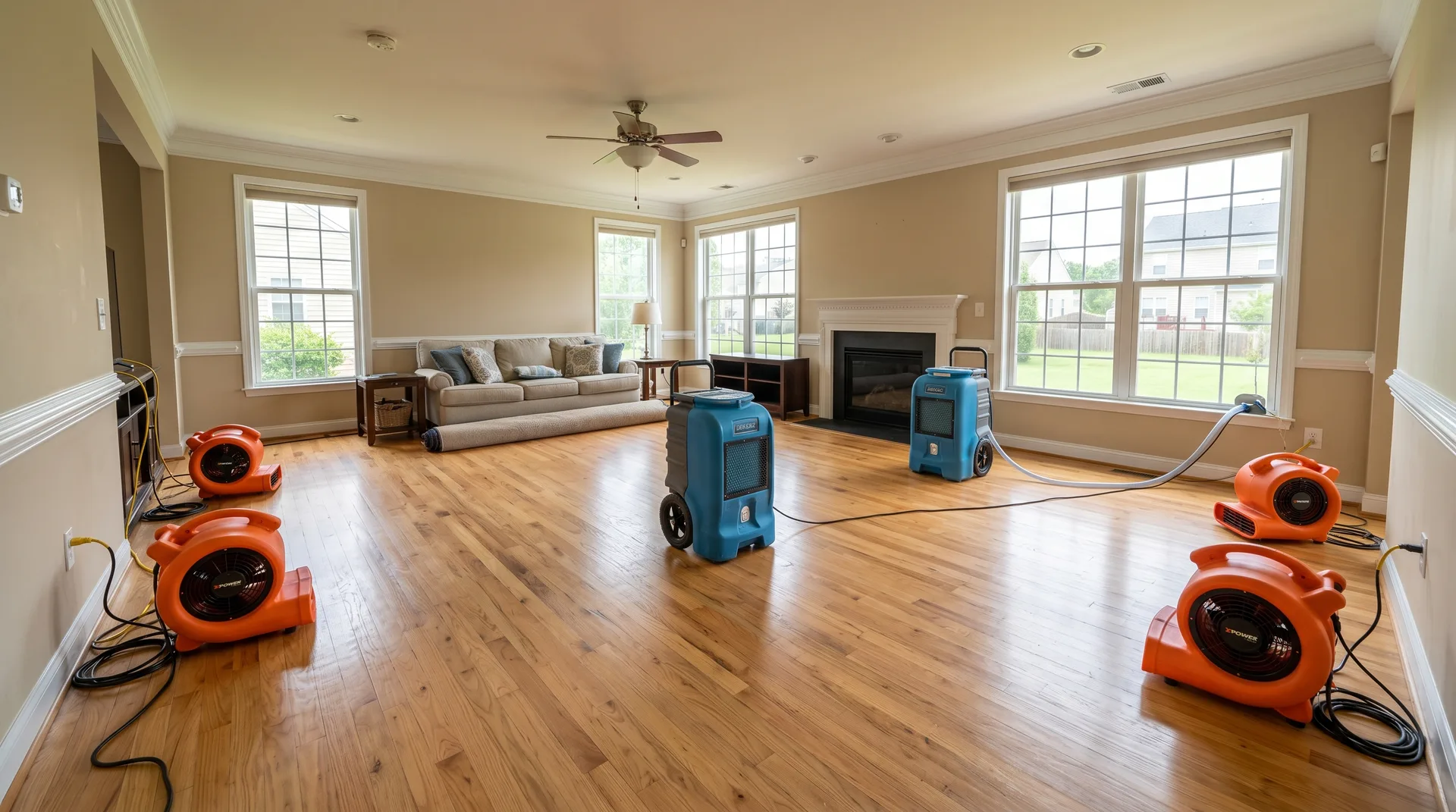
Standard household fans and dehumidifiers are not the same as commercial drying equipment. A box fan blowing across a wet floor moves air but does not create the conditions needed to pull moisture out of building materials. Commercial air movers and dehumidifiers work together in a system designed specifically for structural drying.
We use moisture meters to take readings inside wall cavities, under flooring, and in ceilings throughout the drying process. We return daily to check those readings and adjust equipment as needed. The job is not done until the readings confirm the materials have reached acceptable moisture levels - not when the equipment has been running for a set number of days.
This approach takes more time and more visits than a one-day setup, but it's the only way to confirm the structure is actually dry. That confirmation is what prevents mold from developing after the restoration is complete.
What Happens When Water Damage Is Not Dried Properly
Water migrates into wall cavities, under flooring, and into ceiling assemblies beyond the visible wet area.
Mold begins growing in wet materials. Swelling and warping of wood, drywall, and cabinetry accelerates.
Mold colonies are established. Structural materials continue to deteriorate. Odor becomes noticeable.
Extensive mold growth. Structural damage to framing, subfloor, and other components becomes significant.
Remediation costs increase substantially. Health effects from mold exposure become a concern for occupants.
Time Is the Critical Factor
The sooner proper structural drying begins after a water event, the less damage occurs and the lower the mold risk. A call to us within the first few hours of a water event is the single most effective thing you can do to limit the overall damage.
Common Situations
Signs and Situations That Call for Water Damage Restoration
Water damage is not always dramatic. These are the most common situations we respond to throughout Hampton Roads and Coastal Virginia.
Wet or Damp Flooring
Water under hardwood, laminate, or tile that looks dry on the surface but has soaked into the subfloor underneath. You may feel soft spots or hear a squish before you see any visible damage.
Swollen or Buckled Materials
Baseboards, drywall, cabinets, and wood framing that have absorbed water will swell, warp, or separate from adjoining surfaces. This is a sign water has been sitting longer than it should.
Water Stains on Ceilings or Walls
Yellow, brown, or dark staining from water that migrated through building materials - often indicating an ongoing or past leak. Even old stains can mean there is still hidden moisture.
Musty or Damp Odor
Mold begins growing within 24 to 48 hours of a water event. A musty smell after water damage means biological growth has likely started somewhere in the structure.
Pipe Burst or Appliance Failure
Washing machine hose failures, water heater leaks, dishwasher overflow, and burst supply lines are among the most common sources of sudden, significant water intrusion in homes.
Storm or Flood Intrusion
Water entering through the roof, foundation, windows, or doors during heavy rain, storm surge, or flooding events. Hampton Roads and coastal Virginia see this regularly.
Our Process
How We Handle Water Damage Restoration
Water damage restoration is a process, not a single visit. Here's what proper structural drying looks like from start to finish.
Assessment and Moisture Mapping
We use calibrated moisture meters and thermal imaging to map exactly where water has traveled - including inside walls, under flooring, and in ceilings. What looks dry on the surface often is not.
Water Extraction
Standing water and surface moisture are extracted using truck-mounted or portable extraction equipment before the drying phase begins.
Structural Drying Setup
Air movers and commercial dehumidifiers are placed throughout the affected area. The number and placement of units is based on actual moisture readings, not guesswork.
Daily Monitoring
We return daily to take moisture readings and adjust equipment placement as materials dry. Drying is a process that takes time - it is not a one-time setup.
Affected Material Removal
Materials that cannot be effectively dried - saturated drywall, wet insulation, swollen flooring - are removed to allow structural components to dry and prevent mold from taking hold.
Documentation
Moisture readings, photos, and drying logs are documented throughout the project. This documentation supports insurance claims and confirms the work was done properly.
Important
What Not to Do After Water Damage
Some common reactions to water damage actually make things worse or complicate the restoration process. Here's what to avoid.
Don't assume dry-looking surfaces are actually dry
Water travels through building materials and collects in hidden areas. A floor that looks dry on top can have a saturated subfloor underneath. Moisture meters tell the real story.
Don't delay drying
Mold begins within 24 to 48 hours of a water event. Every day of delay increases the likelihood of mold growth and the extent of material damage.
Don't leave wet cabinets and wall cavities closed up
Enclosed wet spaces trap moisture and create ideal mold conditions. Cabinet bases, wall cavities behind wet drywall, and closed closets need airflow and monitoring.
Don't run your HVAC to dry things out
Running a standard HVAC system through a wet structure can spread moisture and mold spores to unaffected areas. Dedicated drying equipment is a different process entirely.
Don't throw away damaged materials before documenting
If you have an insurance claim, damaged materials should be photographed and documented before removal. We handle this documentation as part of our process.
Water Damage Situations We Handle
Water Damage and Mold
Water Damage That Is Not Dried Properly Leads to Mold
This is not a scare tactic - it's just how it works. Mold needs three things to grow: moisture, a food source (which building materials provide), and the right temperature. After a water event, two of those three conditions are already in place. The only variable you can control is moisture, which is exactly why structural drying matters so much.
We see this pattern regularly: a homeowner has a water event, dries things up as best they can, and then months later notices a musty smell or visible mold. The water damage was not properly dried, and mold developed in the hidden wet areas. By the time it's discovered, what could have been a straightforward drying job has become a mold remediation project.
If you had a water event in the past and are now seeing or smelling signs of mold, the prior water damage is likely the cause. We handle both the mold remediation and can assess whether there is still underlying moisture contributing to the problem.
Mold Inspection & Testing
Had a water event and want to confirm there is no mold developing? A post-water-damage mold inspection is a reasonable precaution.
Mold Remediation
If water damage has already led to mold growth, we handle the full remediation process - containment, removal, and treatment.
Biohazard Cleanup
We also handle sewage backups, biohazard situations, trauma cleanup, and death cleanup throughout the Tidewater region.
Had a water event in Hampton Roads? Call us before the mold clock starts.
The sooner structural drying starts, the less damage occurs and the lower the mold risk. A quick call is usually enough to tell us what you need.
Service Areas
Water Damage Restoration Throughout Hampton Roads
We serve all of Hampton Roads and Coastal Virginia. Click your city for local information about water damage restoration in your area.
Common Questions
Questions About Water Damage Restoration in Hampton Roads
Need Water Damage Restoration in Hampton Roads?
Call Mastertech Tidewater or request help online. Tell us what happened, what area was affected, and we'll help you understand the next step.