
Mold Remediation, Mold Inspection & Biohazard Cleanup in Hampton, VA
Mastertech Environmental Tidewater helps homeowners and property managers in Hampton work through mold problems, moisture issues, water damage, crawl space mold, and difficult cleanup situations.
We serve Hampton and the broader Tidewater region. If you're not sure what you're dealing with yet, that's a fine place to start - call us and describe what you're seeing or smelling.
Tell Us What's Going On
Describe the situation and we'll get back to you quickly. Mold, odor, water damage, crawl space, or something else - we'll help you figure out the next step.
Hampton, VA
Mold, Moisture and Cleanup Issues in Hampton, VA
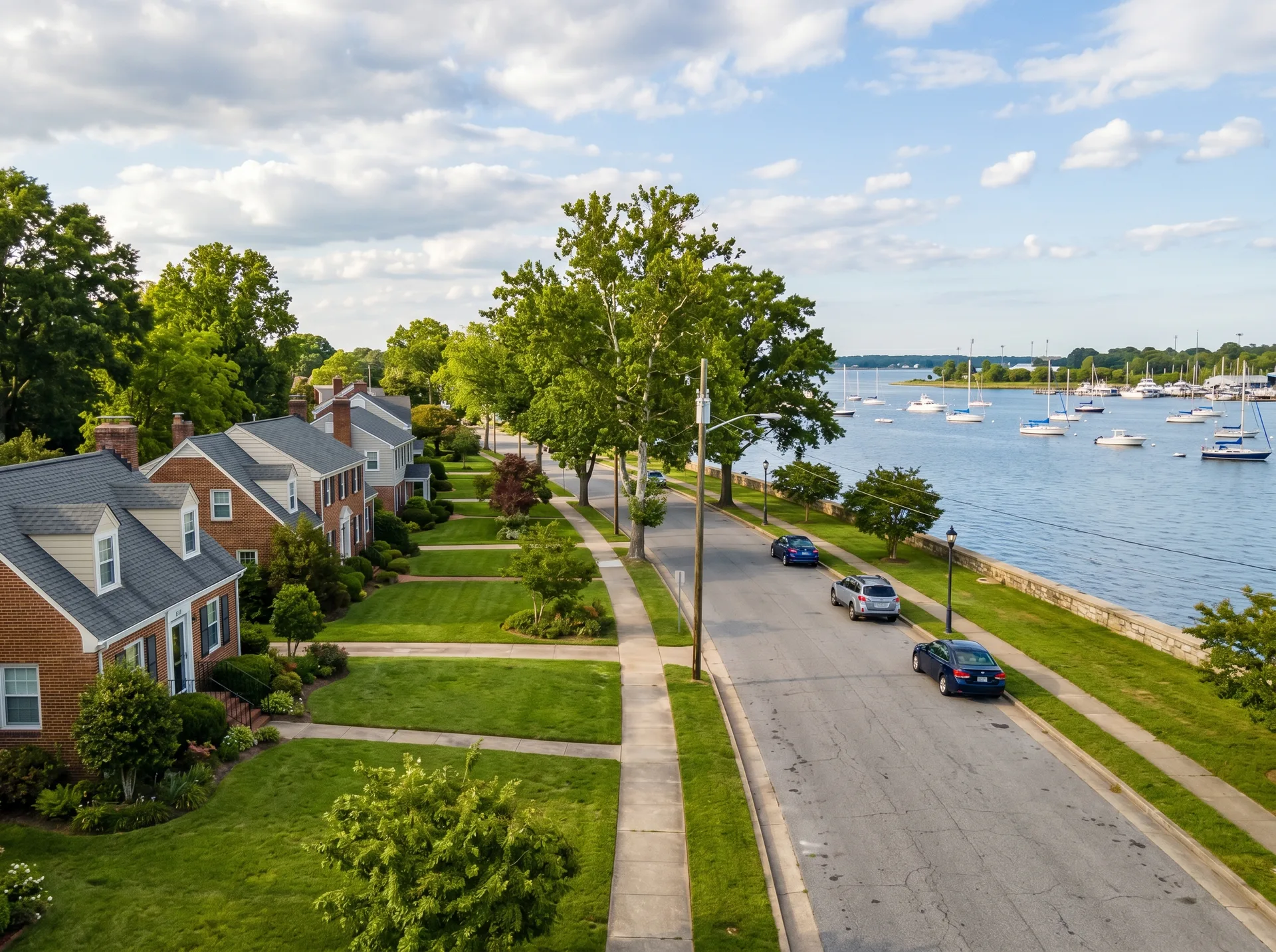
Hampton sits at the southern tip of the Virginia Peninsula, surrounded by water on three sides - the James River, the Back River, and the Chesapeake Bay. That geography creates a persistently humid environment, and homes in Hampton deal with moisture challenges that inland properties simply do not face.
Crawl spaces are one of the biggest contributors. Vented crawl spaces were standard construction for decades, but in Hampton's coastal climate, they often pull humid outside air directly under the home. High groundwater levels and tidal flooding push moisture into structures even when there is no visible water intrusion. Wood joists and subfloor sheathing stay damp, and mold establishes itself without anyone knowing.
HVAC systems are another common source. In hot, humid Hampton summers, ductwork and air handlers create significant condensation. Drain pans overflow, insulation on ducts gets wet, and mold grows in wall cavities near supply vents. Roof leaks, plumbing failures, and storm water intrusion all add to the picture.
Neighborhoods like Buckroe Beach, Fox Hill, and the areas near Langley Air Force Base include a mix of older mid-century construction and more recent development. Older homes often have vented crawl spaces, aging plumbing, and building envelopes that were not designed for today's humidity management standards. Phoebus, Wythe, and the Chesapeake Avenue corridor see these issues regularly.
If you're smelling something musty after a long humid stretch, or a home inspector, pest inspector, or HVAC tech has flagged something, it's worth having it looked at properly.
Tidal Flooding
Hampton's position between the James River and Back River means tidal flooding pushes moisture into structures in many low-lying neighborhoods.
Mid-Century Housing
Buckroe Beach and Fox Hill homes from the 1950s-70s often have original crawl spaces and aging plumbing with decades of moisture exposure.
Coastal Humidity
Being surrounded by water on three sides means Hampton's ambient humidity is consistently higher than inland areas of Hampton Roads.
Storm Surge Risk
Tropical storms and nor'easters push water into Hampton neighborhoods in ways that can take weeks to fully dry out.
Our Services
Our Hampton Mold and Biohazard Cleanup Solutions
From mold inspection and remediation to crime scene and death cleanup - here's a full overview of what we handle in Hampton.
Mold Testing & Inspections
A thorough physical walkthrough using moisture meters and thermal imaging to locate mold sources, identify affected materials, and understand the full scope of the problem. Air and surface samples sent to an accredited lab provide objective data for real estate transactions, insurance documentation, and post-remediation clearance.
Learn MoreMold Remediation and Removal
Proper mold removal using containment barriers, HEPA air scrubbing, removal of affected materials, and antimicrobial treatment following IICRC S520 standards. We address the moisture source so mold does not return - including crawl spaces, attics, walls, and HVAC-related growth throughout Hampton.
Learn MoreWater Damage Restoration
Rapid water extraction, structural drying, and moisture monitoring following flooding, burst pipes, appliance failures, or storm damage. Hampton's flood-prone neighborhoods make fast response especially important to limit secondary damage and prevent mold from establishing in wet building materials.
Learn MoreFire Damage Restoration
Comprehensive cleanup and restoration following fire and smoke damage. We handle soot removal, odor neutralization, structural drying from firefighting water, and coordination of the full restoration process to get your Hampton property back to pre-loss condition.
Learn MoreCrime and Death Scene Cleanup
Professional cleanup and decontamination following violent crimes, traumatic events, unattended deaths, suicides, and accidents. We work discreetly with families, law enforcement, and insurance companies throughout Hampton. Proper removal and disposal of all biohazardous material in compliance with regulations.
Learn MoreHoarding Cleanup
Respectful, non-judgmental cleanup of hoarding conditions - from basic decluttering and sorting to full biohazard remediation when needed. We work at a pace that is comfortable for the resident or family and handle all disposal, cleaning, and sanitization throughout Hampton.
Learn MoreMoisture Sources
Common Moisture Sources in Hampton Homes
Mold needs moisture to grow. Finding where the moisture is coming from is the most important part of any mold inspection. These are the sources we find most often in Hampton properties.

Coastal and Tidal Humidity
Hampton is surrounded by water on three sides - the James River, Back River, and Chesapeake Bay. Ambient humidity stays elevated for most of the year, and that moisture finds its way into wall cavities, attics, and crawl spaces that lack proper vapor control.
Crawl Space Ground Moisture
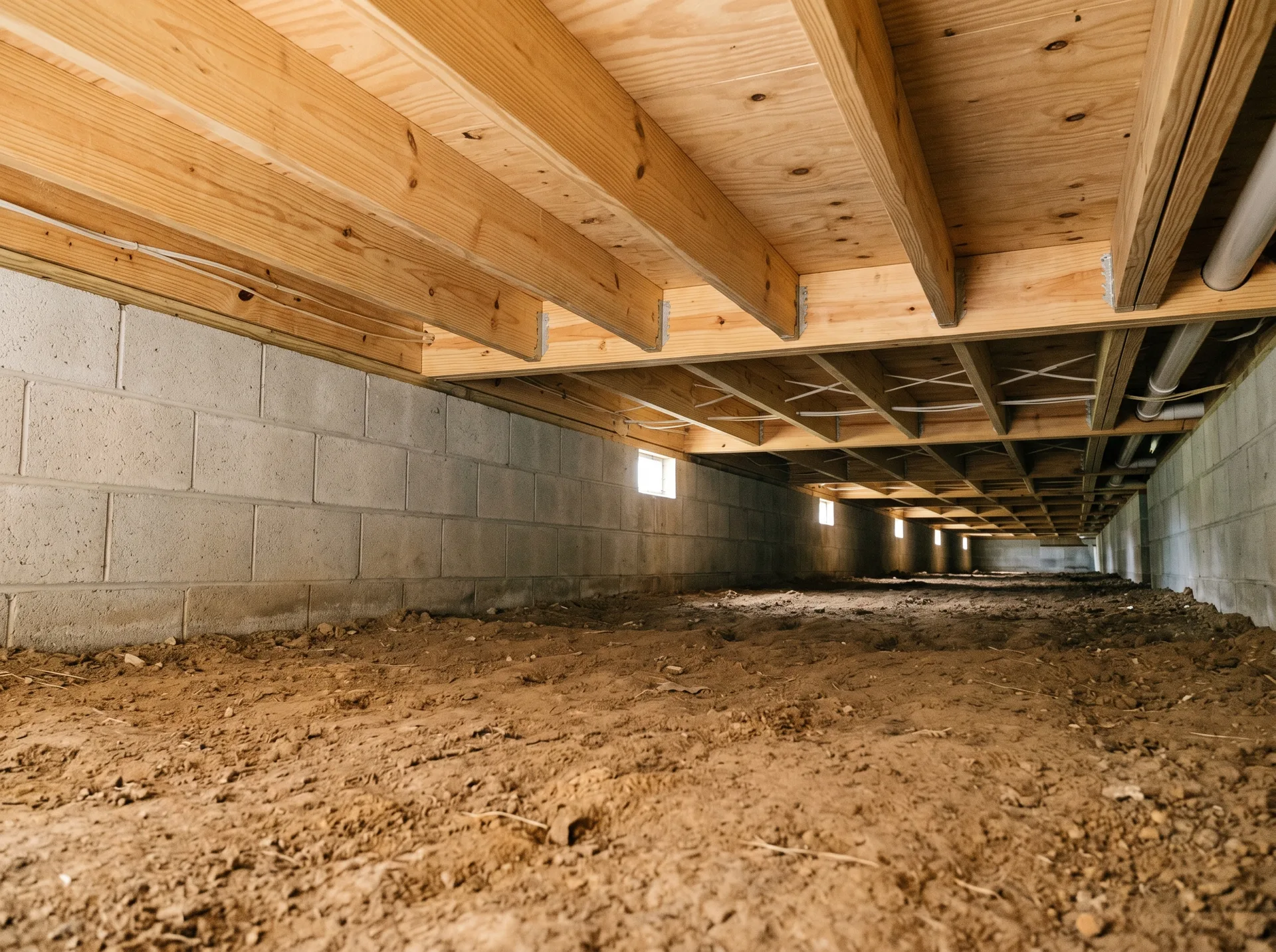
Hampton sits at low elevation with high groundwater in many neighborhoods. Ground moisture evaporates upward through the soil and into the crawl space. Without a proper vapor barrier and conditioned crawl space, this moisture migrates into wood framing and insulation quickly.
HVAC Condensation
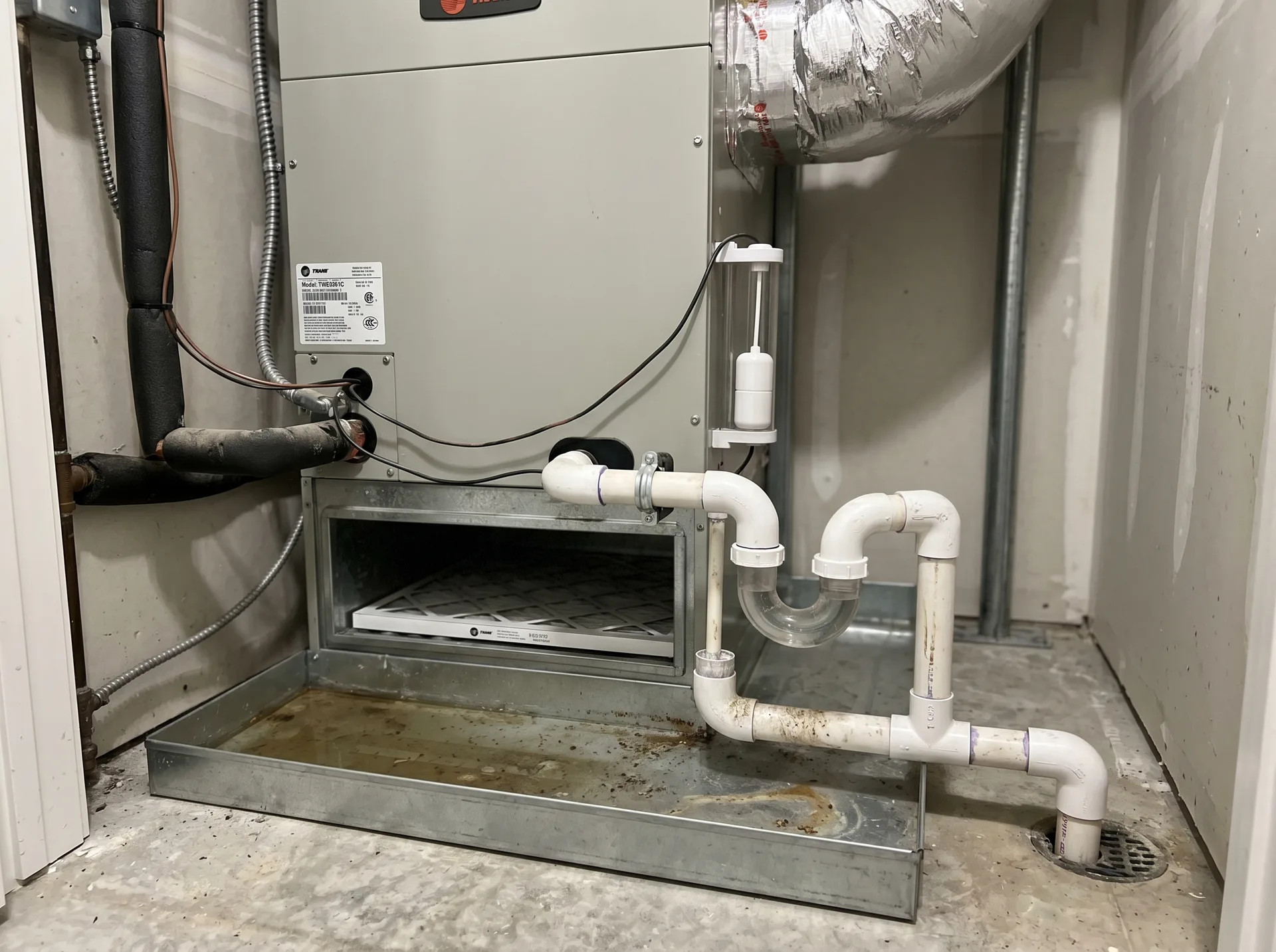
Air handlers and ductwork running through unconditioned spaces sweat heavily in Hampton summers. Clogged condensate drain lines, overflowing drip pans, and poorly insulated ducts are frequent contributors to hidden mold in walls and ceilings throughout Hampton homes.
Plumbing and Appliance Leaks
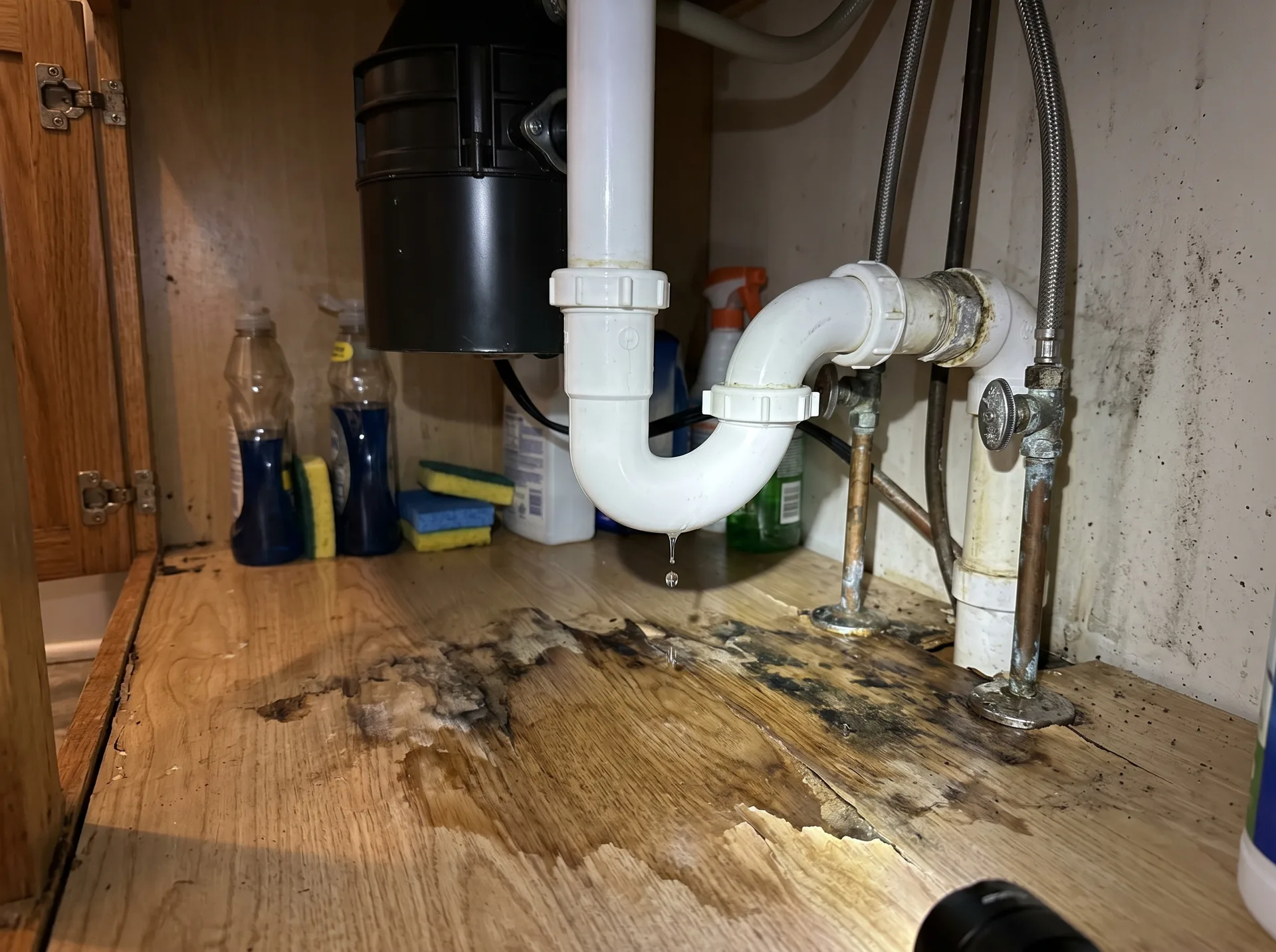
Slow leaks under sinks, behind toilets, around water heaters, and from washing machine connections are common sources of hidden moisture in Hampton homes. These leaks are often concealed inside cabinets or walls and can go unnoticed for months.
Roof and Attic Leaks
Roof penetrations, flashing failures, and damaged shingles allow water into attic spaces. Attic mold from inadequate ridge vent ventilation is also common in Hampton - warm moist air rises into the attic and condenses on cold sheathing, especially in older mid-century homes.
Tidal Flooding and Storm Surge
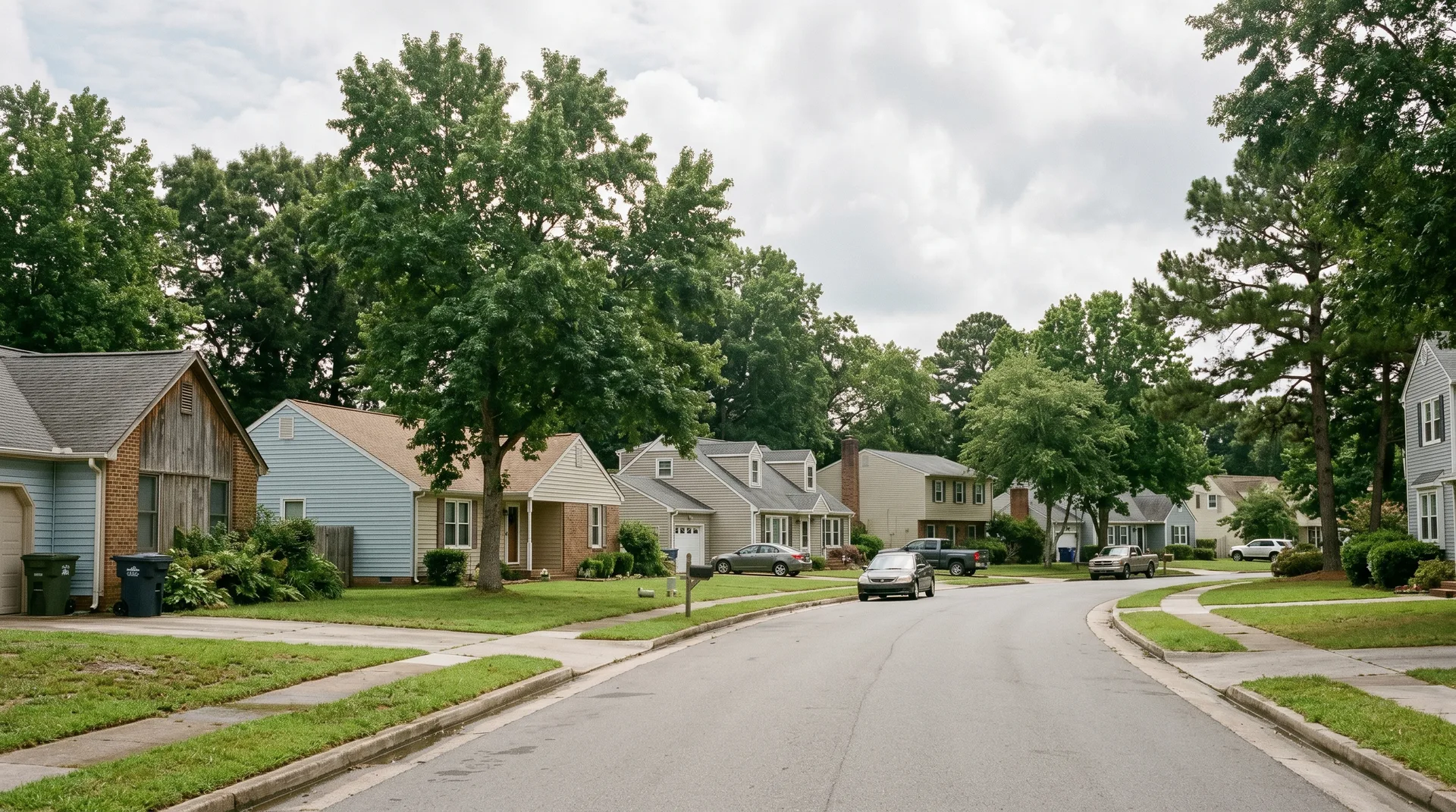
Hampton neighborhoods like Buckroe Beach and Fox Hill experience tidal flooding and storm surge from nor'easters and tropical systems. Water pushes through foundation walls, crawl spaces, and window frames in ways that are not always immediately visible inside the home.
Understanding Your Options
Mold Inspection vs. Mold Testing vs. Mold Remediation
These three services are related but different. Here's a plain-language breakdown of what each one involves and when it makes sense.
Finding the Problem
A mold inspection is a physical walkthrough of the property using moisture meters, thermal imaging, and visual assessment. The goal is to locate moisture sources, identify visible mold growth, find affected materials, and understand the scope of the problem.
- Moisture mapping throughout the structure
- Thermal imaging for hidden wet areas
- Identification of affected materials
- Written report of findings
Getting Lab Data
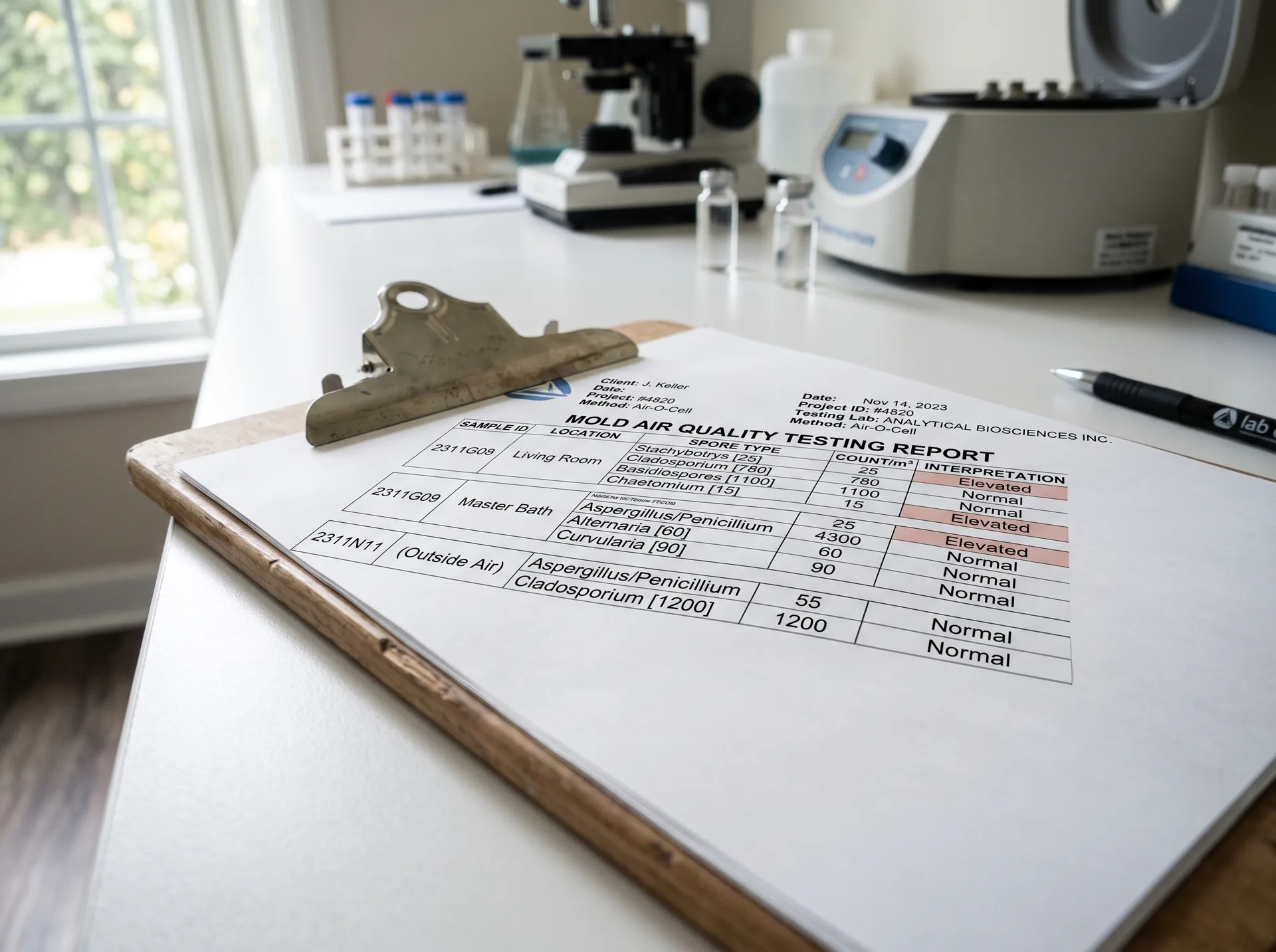
Mold testing collects air samples or surface samples and sends them to an accredited lab. This gives you objective data - spore counts, species identification, and a comparison of indoor vs. outdoor air quality. Testing is useful when you need documentation or when the inspection alone doesn't answer the question.
- Air-O-Cell spore trap air sampling
- Surface tape lift and swab sampling
- Accredited laboratory analysis
- Results used for real estate or post-remediation
Removing the Mold
Mold remediation is the physical work of removing or cleaning mold-affected materials. It involves containment to prevent cross-contamination, HEPA filtration to capture airborne spores, removal of materials that cannot be cleaned, treatment of surfaces, and addressing the moisture source.
- Containment barriers and negative air pressure
- HEPA air scrubbing during work
- Removal and disposal of affected materials
- IICRC S520 standard protocols
Mold Removal Hampton
A Clear Cleanup Plan Based on What's Actually Going On
We Start With the Source, Not Just the Surface
Mold and cleanup work should start with a proper assessment. That means identifying the moisture source, understanding how far the affected area extends, and scoping the work before anything gets removed or treated. Wiping down a surface or spraying bleach on visible growth is not remediation - it does not address the contamination already in porous materials and almost always leads to regrowth.
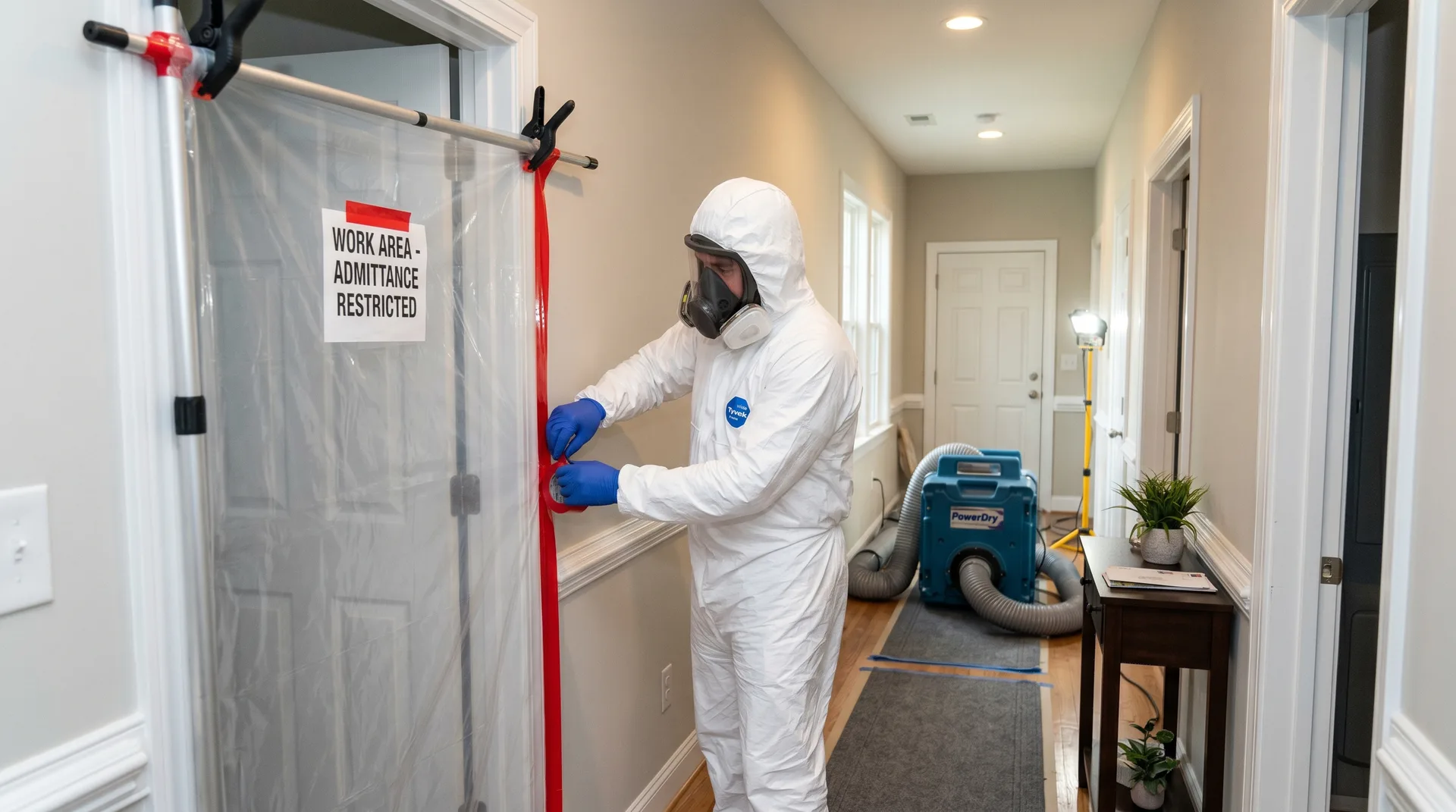
Proper mold remediation in Hampton starts with containment. We isolate the affected area from the rest of the home using poly barriers so that disturbing the mold does not spread spores to clean spaces. HEPA air scrubbers run during the work to capture airborne particles. Where materials cannot be effectively cleaned - drywall, insulation, some wood - they come out. Surfaces that can be cleaned get treated with appropriate antimicrobials.
For larger projects, we run negative air pressure inside the containment zone, which means air flows in but does not flow back out to the rest of the house. Everything gets documented with photos throughout the project.
Post-remediation clearance testing - either by us or by an independent third party - confirms the work was done correctly before containment comes down. Our mold removal process follows IICRC S520 standards.
Common Mold Situations in Hampton Homes
Not sure whether you need mold testing, mold remediation, or water damage cleanup?
Tell us what you're seeing or smelling and we'll help you figure out the next step. A quick phone call is usually enough to narrow it down.
Crawl Spaces
Crawl Space Mold Remediation in Hampton, VA
Why Crawl Spaces Are a Common Mold Source in Hampton
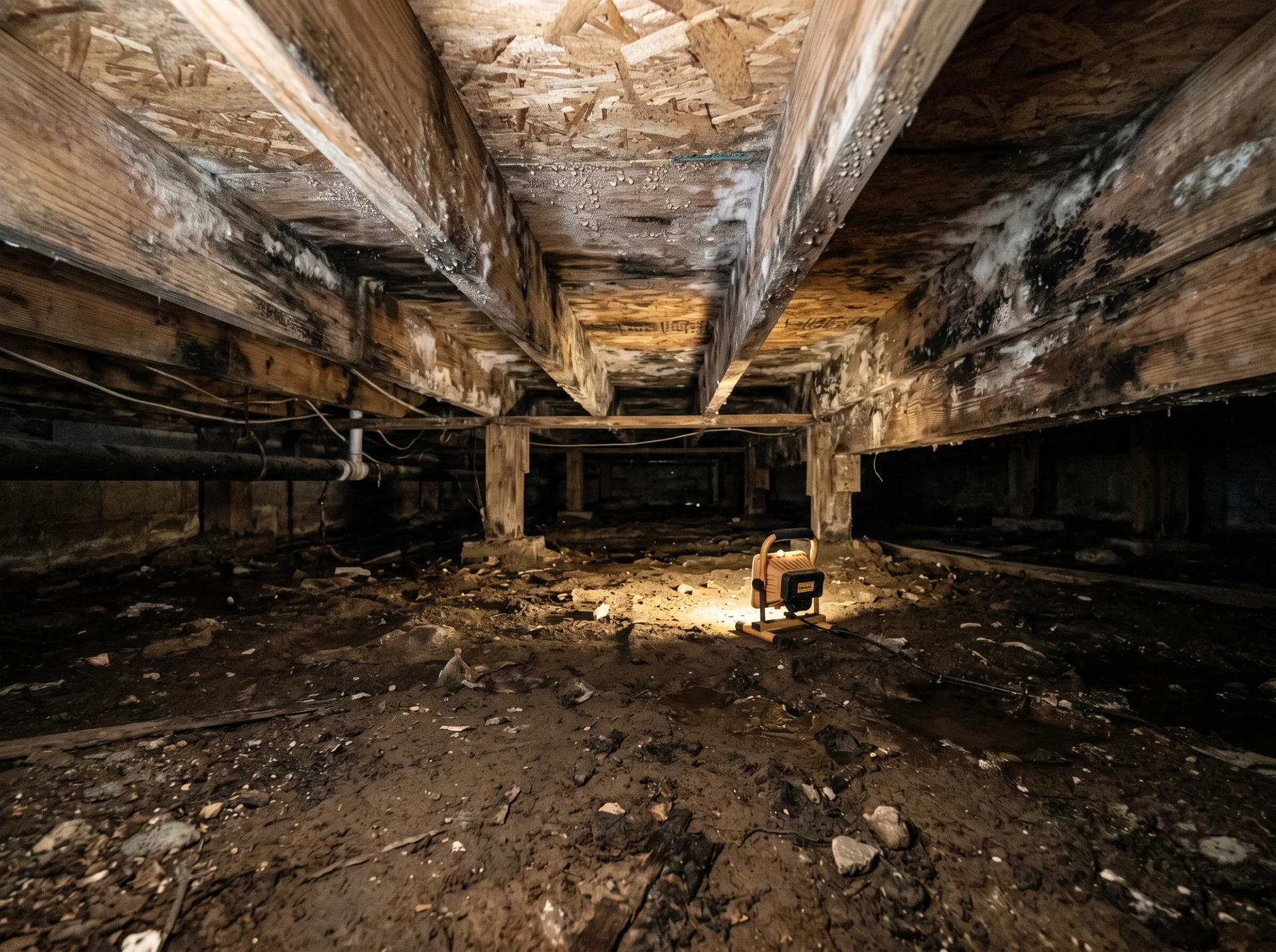
Crawl spaces in Hampton are exposed to some of the most mold-friendly conditions in the region. Hampton's low elevation and high groundwater mean moisture evaporates upward through the soil constantly. Warm humid air from the James River, Back River, and Chesapeake Bay enters through foundation vents, and the dark enclosed space gives mold exactly what it needs to grow on wood joists, subfloor sheathing, and batt insulation.
Many homes in Hampton have original vented crawl spaces that were standard construction decades ago. The building science has changed - vented crawl spaces in coastal humid climates like Hampton often create more moisture problems than they solve. Encapsulation and conditioning are now the recommended approach for most Hampton homes.
Crawl space mold remediation involves removing contaminated insulation, treating affected wood framing and sheathing with appropriate antimicrobials, and addressing the moisture conditions that caused the problem. We can also coordinate encapsulation work to prevent recurrence.
Signs of Crawl Space Mold and Moisture Problems
Most homeowners do not go into their crawl space regularly, so crawl space mold often goes unnoticed until it's well established. The most common tip-offs come from other people who go under the home - pest inspectors, HVAC technicians, and home inspectors frequently find mold during routine work under Hampton homes.
If you notice a persistent musty smell on the first floor, soft or bouncy spots in the flooring, or elevated indoor humidity readings, those are worth investigating. Real estate transactions in Hampton frequently surface crawl space mold during inspection, especially in Buckroe Beach, Fox Hill, and Phoebus.
Inspection & Testing
Mold Inspection and Mold Testing in Hampton, VA
When a Mold Inspection Makes Sense
A mold inspection makes sense any time you have a musty odor you cannot explain, visible staining that might be mold, a history of water damage, or you're buying or selling a property. It also makes sense when someone in the home is experiencing respiratory symptoms that seem worse indoors, or when a contractor, pest inspector, or HVAC tech has mentioned moisture or mold.
Hidden mold is common in Hampton homes. It grows behind drywall near plumbing, inside wall cavities where condensation collects, and in attic spaces that are not regularly accessed. Thermal imaging and moisture meters help locate it without unnecessary demolition.
When Mold Testing Makes Sense
Mold testing is worth considering in these situations:
Moisture investigation uses calibrated meters and thermal imaging to map wet areas in walls, floors, and ceilings. Without finding and fixing the moisture source, mold will return regardless of how thorough the remediation is.
Where Mold Hides
Common Places We Find Mold in Hampton Homes
Mold can grow anywhere moisture is present. These are the spots we check first during an inspection - and the ones Hampton homeowners most often overlook.
Crawl Spaces
One of the most common spots in Hampton. High groundwater, tidal flooding, and coastal humidity combine under the home, and mold grows on wood joists, subfloor sheathing, and insulation without anyone noticing.
Attics
Attic mold often comes from inadequate ridge vent ventilation or a bathroom exhaust fan venting into the attic instead of outside. Warm moist air hits cold sheathing and mold follows - common in Hampton's older mid-century homes.
Bathrooms
Chronic humidity from showers with poor exhaust fans leads to mold on grout, caulk, drywall behind tiles, and inside wall cavities near tubs and showers throughout Hampton homes.
Kitchens and Sink Cabinets
Slow drips under the kitchen sink are easy to miss. Mold grows on the cabinet floor, the back wall, and sometimes into the adjacent drywall before anyone notices the leak.
HVAC Closets and Air Handlers
Musty smell from HVAC is often a sign of mold on the air handler, in the drain pan, or on duct insulation. The system then distributes spores throughout the house - a common issue in Hampton's older housing stock.
Around Windows and Exterior Doors
Mold around windows is usually a sign of condensation or a failed seal. Wind-driven rain during nor'easters and tropical storms also works its way through window frames and into wall cavities in Hampton homes.
Garages and Utility Rooms
Water heater leaks, washing machine connections, and poor ventilation make garages and utility rooms common spots for mold behind drywall and under flooring.
Behind Drywall After Leaks
Mold behind walls is common after any water intrusion. It can grow for months without being visible. A musty smell in a specific room is often the first sign - especially after storm events in Hampton.
Under Flooring After Appliance Leaks
Dishwasher leaks, refrigerator ice maker lines, and washing machine overflows soak into subfloor materials. If not dried quickly, mold establishes under the flooring within days.
Biohazard Cleanup
Biohazard Cleanup Services in Hampton
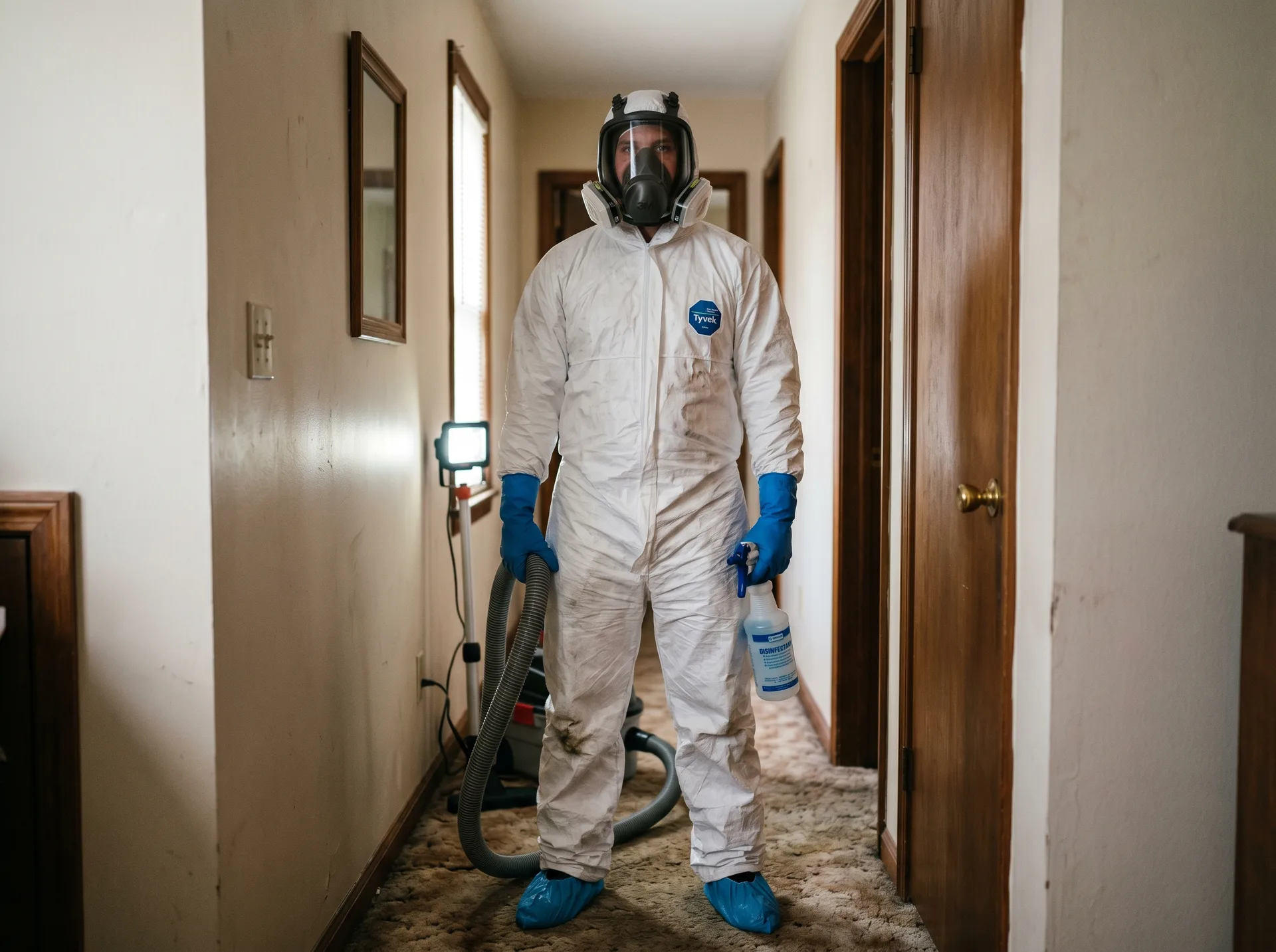
We handle crime scene cleanup, death cleanup, unattended death cleanup, trauma cleanup, blood cleanup, and hoarding cleanup in Hampton. These are situations that require proper decontamination, regulatory compliance, and a level of care that standard cleaning services are not equipped for.
We work with families, property managers, law enforcement, and insurance companies throughout Hampton. Response is available for urgent situations.
Service Areas
We Also Serve These Nearby Communities
Serving Hampton, Virginia Beach, Chesapeake, Norfolk, Portsmouth, Suffolk, Newport News, Williamsburg, Yorktown, Poquoson, and nearby Tidewater communities. Not sure if you're in range? Call and ask.
Next Steps
What Happens After You Contact Us?
Here's what to expect when you reach out - whether by phone or through the form on this page.
We Listen to What You're Dealing With
When you call or submit the form, we start by asking what you are seeing, smelling, or experiencing. There is no script - just a straightforward conversation to understand the situation before anything else.
We Help You Figure Out the Right Service
Not every situation is the same. We help you determine whether you need a mold inspection, air quality testing, water damage drying, biohazard cleanup, or something else entirely. If we are not the right fit, we will tell you that too.
We Schedule the Visit
Once we understand what you need, we schedule the inspection or service at a time that works for you. For urgent situations - active water damage, biohazard cleanup, or emergency response - we move quickly.
We Explain What We Found
After the inspection or assessment, we walk you through the findings in plain language. You will know what we found, where it is, what caused it, and how serious it is - before any work begins.
You Get a Clear Scope Before Work Starts
If cleanup or remediation is needed, we provide a clear written scope of work before anything gets started. No surprises, no pressure. You understand exactly what is being done and why.
Common Questions
Questions About Our Hampton Services
Need Help in Hampton?
Tell us what you're dealing with. We'll ask the right questions and help you figure out the next step.